
Halloween Is One Night a Year. Operational Nightmares Happen Every Week.
How smarter automation can give your team more time, focus, and breathing room before the doors open.
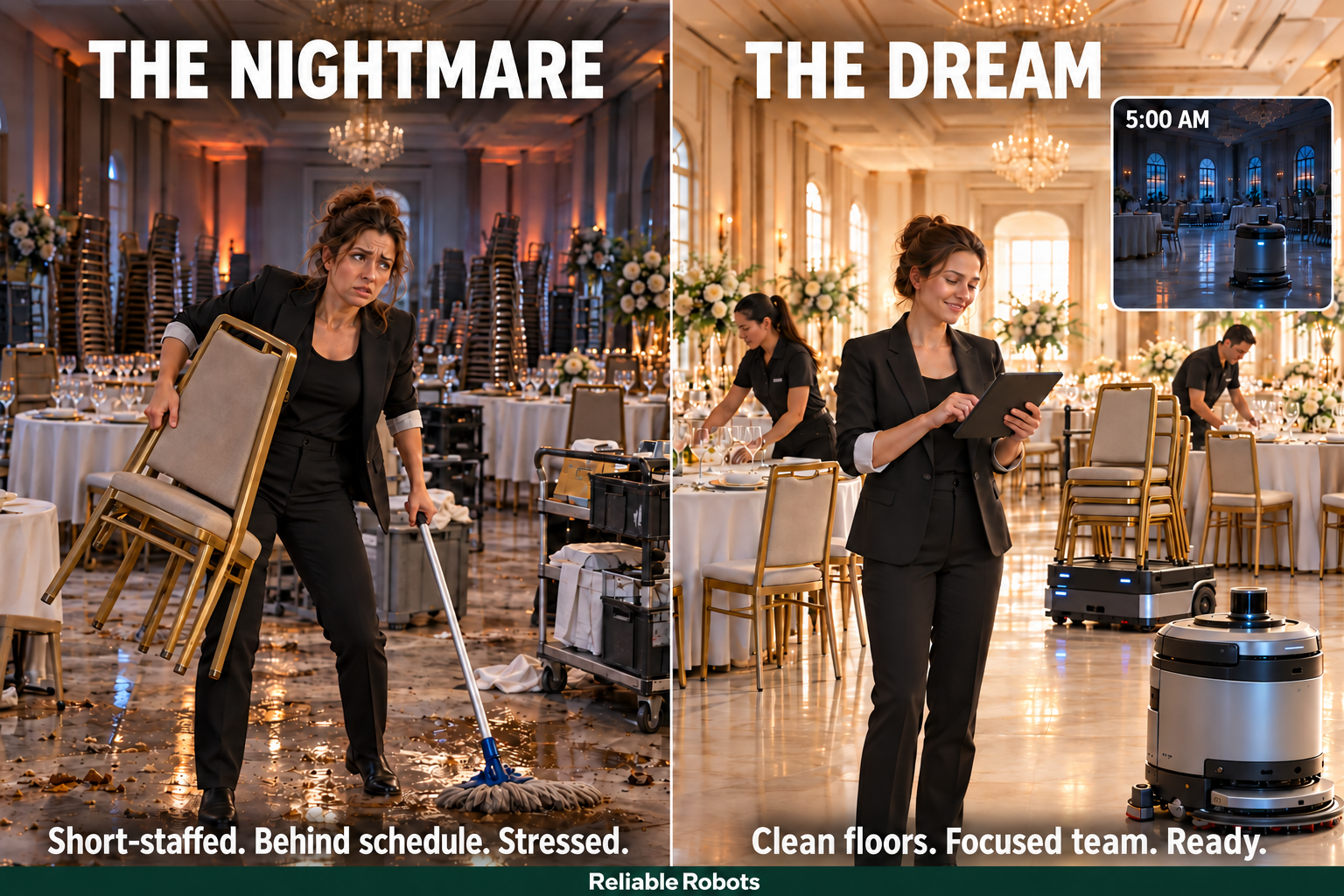
You think Halloween is scary? Imagine you have a busy event tomorrow.
You’ve spent weeks planning every detail, coordinating teams, and making sure the schedules line up. You even went to bed early so you could arrive rested and ready to rock the day.
Then the messages start.
“I can’t make it.”
Another person doesn’t show. Someone quits.
Equipment still needs to be moved. Tables and chairs need setting up. The floors need cleaning. Each task feels like it could take hours, and now you’re choosing which one you can afford to leave unfinished.
The doors open in 30 minutes, and everyone is looking at you.
Halloween is one night a year. For many businesses, this kind of scramble happens every week.
When every task competes for the same people
A staffing shortage quickly becomes a scheduling problem.
The person cleaning the floors is also needed to move tables. The person moving tables should be checking the room layout. The manager answering calls ends up grabbing a mop.
Your best people spend the morning switching between jobs, trying to keep everything moving. Every interruption leaves something unfinished.
Eventually, the essentials get done. But the details receive whatever time and energy are left.
There’s less time for a walkthrough. Less time to catch a missing place setting or an entrance that needs attention. And by the time guests arrive, your team has already worked through a stressful shift.
Now picture a different morning
You arrive on site, and the floors are already clean.
The cleaning robot started its scheduled route at 5 AM, before anyone on your team needed to be there. Your crew arrives to a space that’s ready for setup.
A material-moving robot helps transport chairs, supplies, and equipment between storage and the event space. Your team loads, unloads, and positions what’s needed, while the robot handles the repeated trips.
Your best team members—a smaller, dependable core crew—show up recharged and focused. They have clear responsibilities and tools that help them finish each task.
They can concentrate on the work in front of them without juggling 10 jobs before the doors even open.
What once needed four people can become work for two
Consider a setup that normally ties up four people: two cleaning the floors and two moving equipment, prepping, and arranging the room.
With routine floor cleaning completed ahead of time and transport supported by a robot, two people may be able to handle the essential preparation that previously required four. The actual result depends on the space, equipment, travel distances, and work involved.
That gives you options.
You can prepare the event with a smaller crew. Or you can keep the same team and give the other two people time to focus on details: checking the layout, arranging tables, inspecting entrances, and making sure the room feels ready for guests.
Either way, fewer tasks are competing for everyone’s attention.
Give your team room to do their jobs well
The repeated walking, hauling, and floor cleaning all need to happen. But when they consume your team’s available hours, they leave less room for judgment, care, and service.
Completing those routine tasks more efficiently gives your people time to notice things.
A table arrangement that blocks access. Supplies missing from a service station. A last-minute request that needs someone’s full attention.
You have time for a proper walkthrough. Time to correct something before it becomes a problem. Time to give clear direction without rushing between unfinished tasks.
Your team reaches opening time prepared, with energy left to run the event.
Build a plan that holds up on a difficult day
Making this work takes planning.
Cleaning routes need to fit the venue’s surfaces, access, and schedule. Transport equipment needs to suit the loads and the routes between storage and setup. People need clear responsibilities for preparing the robots, handling exceptions, and checking the finished work.
At Reliable Robots, we help businesses assess those opportunities, select suitable equipment, integrate it into daily operations, and keep it running. We look at the work involved and the financial case so the investment addresses a real operational problem.
For an event venue, that could mean clean floors before the crew arrives, fewer trips to storage, and more time spent making sure every detail is right.
You’ve spent weeks planning the event. Your operating plan should give you—and your team—the capacity to deliver it.
Which task pulls your team away from getting ready most often: cleaning, moving equipment, or the constant switching between both? Talk to Reliable Robots about where automation could help.
